Research library / Guides
How to store peptides: powder, solution and spray
What water, heat, light and repeated freezing do to a peptide, and how to limit each.
Peptides are most stable as dry, lyophilized powder, kept cold, dark and sealed. Once dissolved, they break down faster, so how you store a reconstituted vial matters more. Here is what water, heat, light and repeated freezing do to a peptide, and how to limit each.
01
What breaks peptides down
Four things drive most degradation:
- Water, which drives reactions such as deamidation. A 1999 study found that the deamidation rate of a model peptide rose with the water content of its dry solid.
- Heat, which speeds every degradation reaction.
- Oxygen and light, which oxidize sensitive residues such as methionine, cysteine and tryptophan.
- Freeze–thaw cycles and shaking, which can drive aggregation and particles.
A 2014 review of peptide impurities catalogs the degradation products these processes leave behind.
Sources: [1] Journal of Pharmaceutical Sciences · 1999 · [3] Journal of Pharmaceutical and Biomedical Analysis · 2014
02
Storing lyophilized powder
Dry powder is the most stable form. Keep vials sealed, dry, dark and cold until you need them; short periods at room temperature, such as shipping, are tolerated by dry powder.
For long-term storage, many labs keep dry stock at −20 °C or colder. A 2015 FDA laboratory study stored a lyophilized peptide hormone at −20 °C, 4 °C, 25 °C, and 25 °C with 60% humidity. It measured content losses within eight weeks, and in the warm, humid condition particles grew within one week after reconstitution.
Let a cold vial reach room temperature before opening it, so moisture from the air does not condense on the powder.
Sources: [2] International Journal of Pharmaceutics · 2015 · [1] Journal of Pharmaceutical Sciences · 1999

03
Storing a reconstituted peptide
Once dissolved, a peptide is exposed to water full time, so reconstituted vials are usually refrigerated and used within a limited period. How long depends on the peptide and the solvent; follow the documentation for your material.
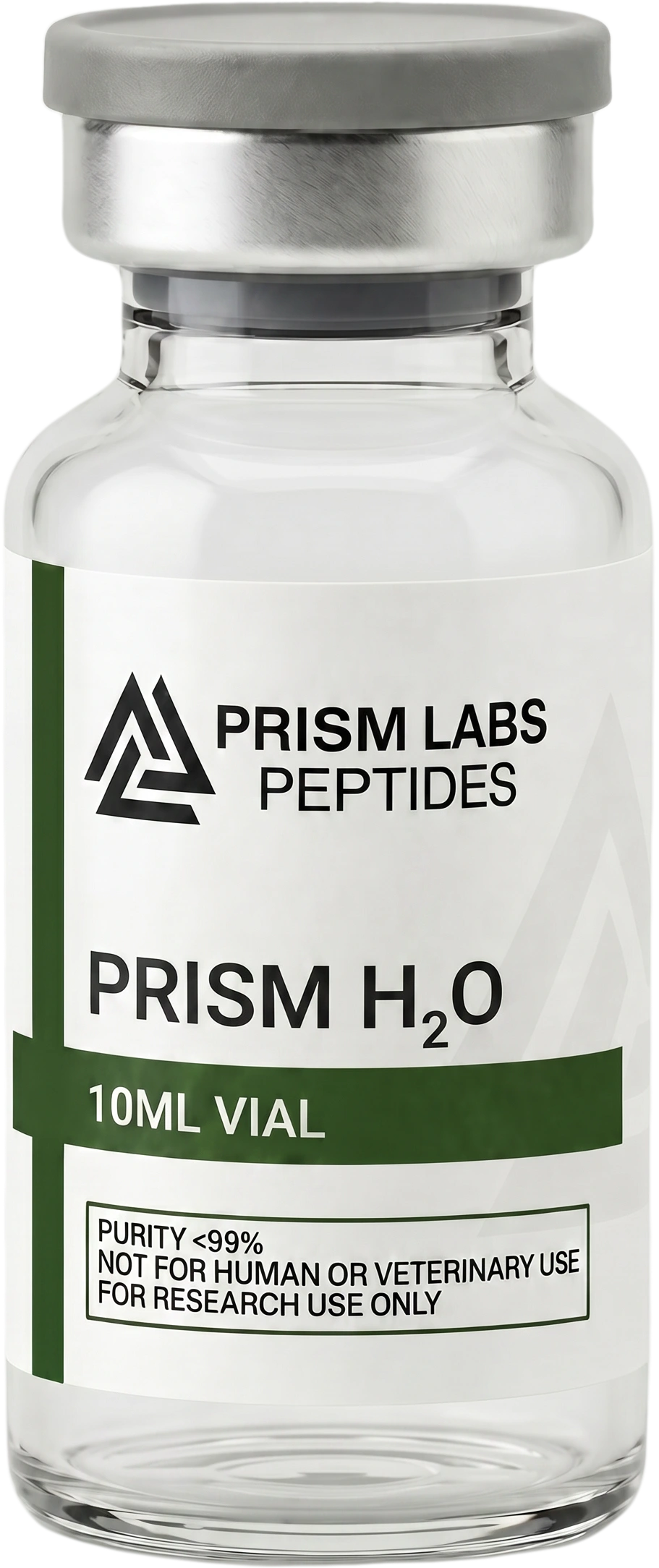
Bacteriostatic water, such as , contains benzyl alcohol to limit bacterial growth between entries, and the opened vial has its own time limit: how long bacteriostatic water lasts.
Avoid freezing and thawing a solution repeatedly. If a solution must be frozen, split it into single-use portions first.
04
Storing premixed nasal sprays
A spray is already a solution, so it follows the rules for dissolved peptides: keep it capped, cool and out of light, and follow the storage directions for the product.
How sprays and vials differ: peptide nasal spray vs vial.
05
Five habits that prevent most problems
Small routines matter more than equipment:
- Label each vial with its reconstitution date and concentration.
- Record the lot number with your experiment notes, so results trace back to a COA.
- Disinfect the stopper and use a new needle and syringe for every entry, as CDC injection-safety guidance requires in healthcare.
- Store vials upright in a dedicated, temperature-stable spot, not a refrigerator door.
- Discard anything cloudy or discolored, or with visible particles.
Sources: [4] CDC · Injection Safety Checklist
A little more clarity
Questions, answered
How should lyophilized peptides be stored?
Sealed, dry, dark and cold. Dry powder tolerates short periods at room temperature, such as shipping; many labs keep long-term stock at −20 °C or colder.
Do peptides need to be refrigerated?
Reconstituted peptides are usually refrigerated. Dry powder is more forgiving, but cold storage extends its life.
Can you freeze reconstituted peptides?
Repeated freeze–thaw cycles can damage peptides. If a solution must be frozen, split it into single-use portions first.
Why let a vial warm up before opening it?
A cold vial opened in warm air collects condensation, and water speeds peptide breakdown.
How long do peptides last after reconstitution?
It depends on the peptide and the solvent. Follow the documentation for your material, and discard anything that looks cloudy or has particles.
Follow the evidence
Sources & reading notes
Open the original record for its methods and limitations. The sources below do not certify the supplied product or its finished formulation.
- Journal of Pharmaceutical Sciences · 1999 ↗
Water content speeds deamidation of a peptide in dry solids.
- International Journal of Pharmaceutics · 2015 ↗
FDA laboratory study of storage temperature and humidity on a lyophilized peptide.
- Journal of Pharmaceutical and Biomedical Analysis · 2014 ↗
Review of the impurities that arise in synthetic peptides.
- CDC · Injection Safety Checklist ↗
Disinfect the stopper and use a new needle and syringe for every vial entry.
Prepared by Prism Labs from the linked source records and public product documentation. Research context only; not a preparation protocol or a claim about outcomes. Send a source correction.
Keep exploring
More from the research library.
Where to buy peptides
Eight checks that separate a documented supplier from a risky one.
Read the article ↗GuidesHow to read a peptide COA
Three results, three different questions. Read them separately.
Read the article ↗GuidesHow to reconstitute peptides
Seven steps from dry powder to a clear, labeled vial, plus the concentration math.
Read the article ↗