Research library / Guides
What you gain and give up with one vial, with the prices side by side.
A blend puts several peptides in one vial at a fixed ratio. Separate vials cost more, but each has its own lab report and you control each amount. At Prism Labs, Klow and Glow cost far less than the same amounts bought as single vials, and the current prices are below.
01
What is in each blend?
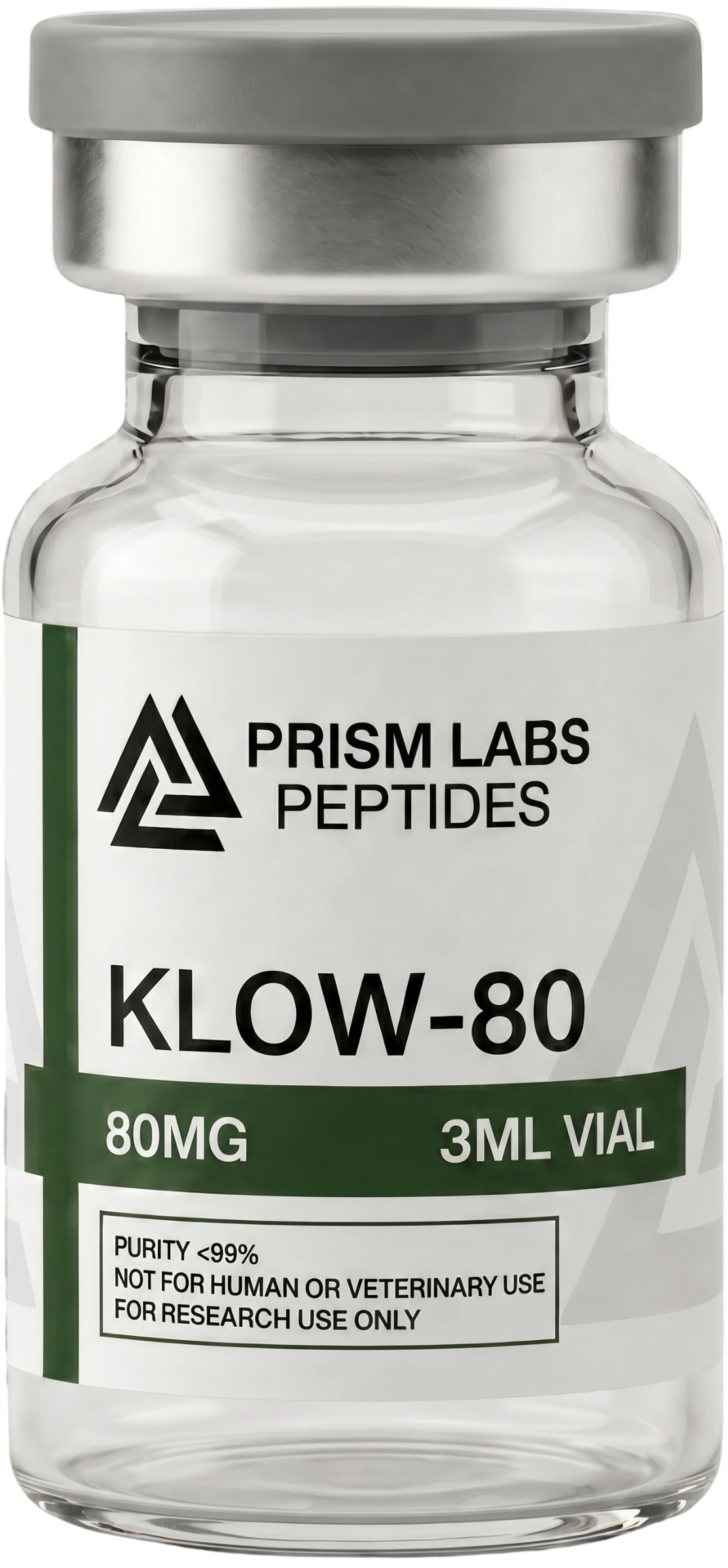
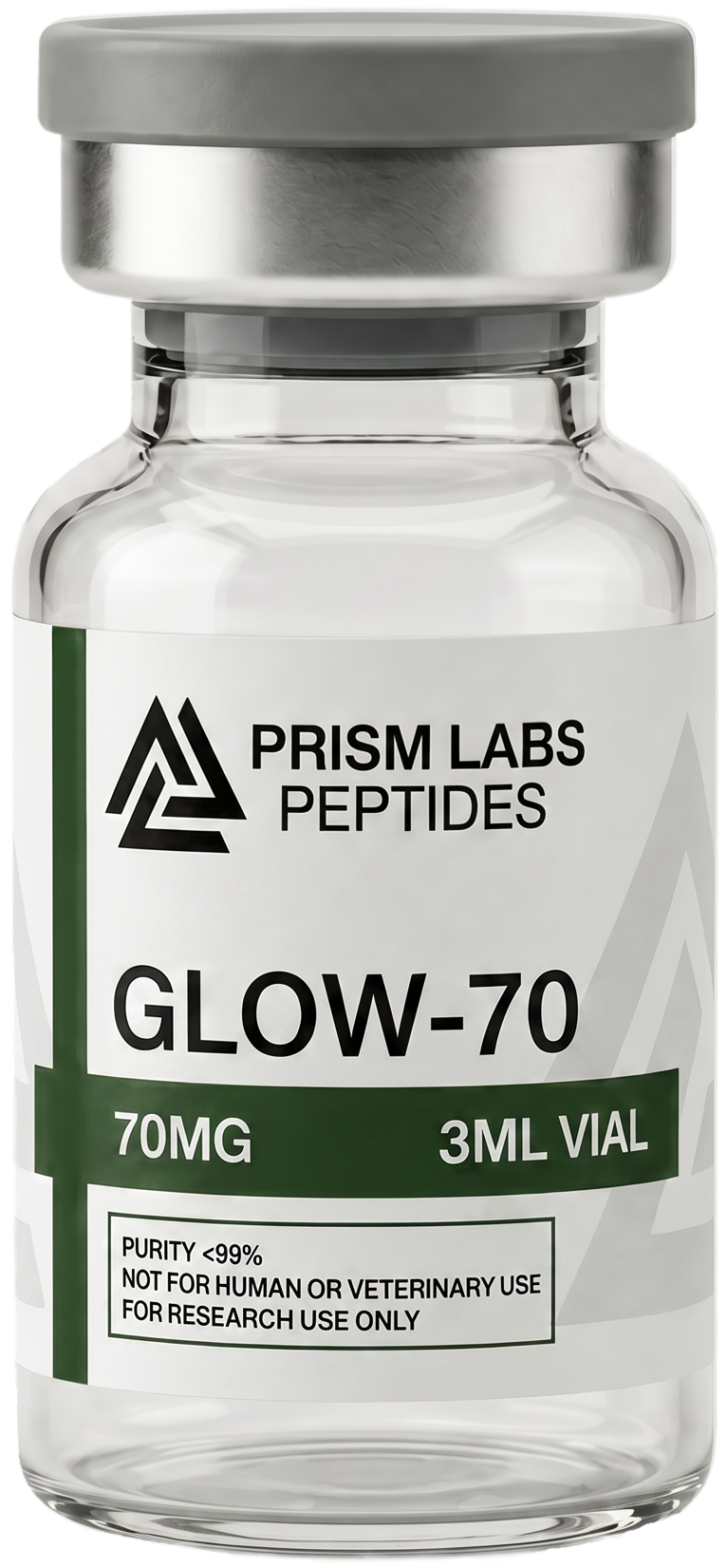
Two of our blends can be compared directly with single vials. By labeled amount:
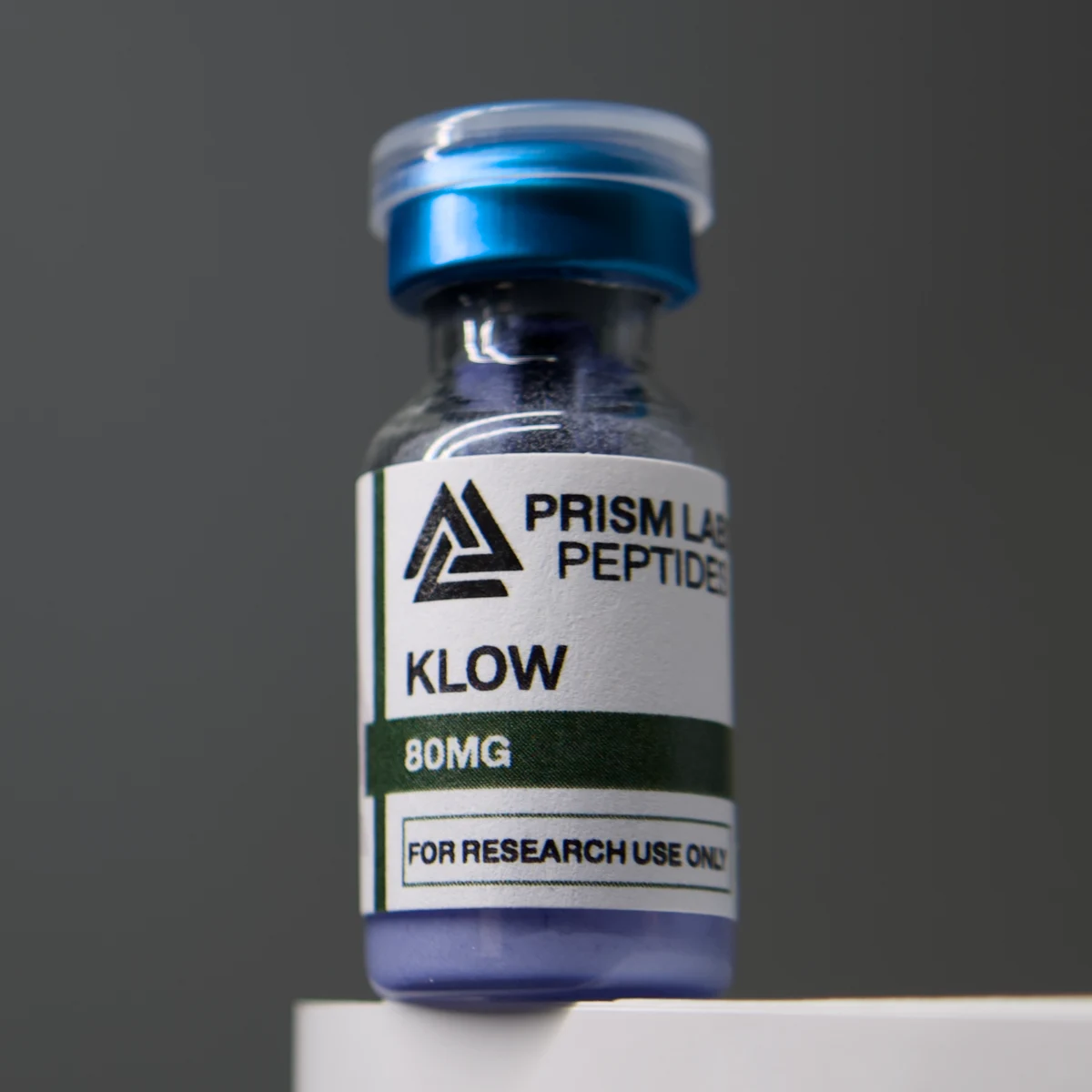
- Klow-80: 50 mg GHK-Cu, and 10 mg each of BPC-157, TB-500 and KPV.
- Glow-70: 50 mg GHK-Cu, and 10 mg each of BPC-157 and TB-500.
A stack is something else: the Wolverine Stack (BPC + TB) is separate vials sold together, not one mixed vial.
02
How much does a blend save?
Each blend against the same labeled amounts bought as single vials, at today’s catalog prices:
| Blend | Blend vial | Single vials | Difference |
|---|---|---|---|
| Klow-80 | $94.99 | $194.96 | $99.97 |
| Glow-70 | $84.99 | $144.97 | $59.98 |
Catalog prices, before pack discounts or codes.

03
What do you give up with a blend?
Control. One vial means one set of decisions:
- A fixed ratio: you can’t change the share of any one peptide.
- One concentration: every draw carries all the components in the same proportions.
- One clock: everything dissolves together, so everything shares the same storage window.
Separate vials let you change each amount, mix each one when you need it, and stop one without the others.
They also make a result easier to read. HHS limited its 2026 compounding policy to single-ingredient products partly for that reason, saying it is easier to attribute outcomes to a specific substance. In a lab, a blend can’t tell you which component did what.
Sources: [1] HHS · 503A peptide enforcement discretion policy · 2026
04
How is a blend tested?
Each lot gets its own report, like any vial. A blend has no single formula, so the report gives one purity figure for the blend, and our latest reports also list the measured amount of each component. How to read them: how to read a peptide COA.
How the two blends differ, and what the studies do and don’t cover: Klow vs Glow.
A little more clarity
Questions, answered
Is a peptide blend cheaper than separate vials?
At Prism Labs, yes, by a wide margin. The table on this page shows the current prices.
Is a blend the same as a stack?
No. A blend is several peptides mixed in one vial. A stack is separate vials sold together.
Can I mix separate vials into one?
We don’t test mixtures, so no lab report covers one. Each report applies only to the vial it was run on.
Does a blend have its own lab report?
Yes. Each lot has its own report, with one purity figure for the blend.
Are Prism Labs blends for human use?
No. Prism Labs sells them for laboratory research use only.
Follow the evidence
Sources & reading notes
Open the original record for its methods and limitations. The sources below do not certify the supplied product or its finished formulation.
- HHS · 503A peptide enforcement discretion policy · 2026 ↗
Limits compounded products to a single peptide, and explains why oral peptides are difficult.
Prepared by Prism Labs from the linked source records and public product documentation. Research context only; not a preparation protocol or a claim about outcomes. Send a source correction.
Keep exploring
More from the research library.
Klow vs Glow
Two blends that share three peptides. One extra ingredient makes the difference.
Read the article ↗BlendsKlow-80
A four-peptide blend, taken apart component by component.
Read the article ↗BlendsGlow-70
Three peptides in one vial, taken apart component by component.
Read the article ↗