Research library / Comparisons
vs : what is the difference?
Two unrelated peptides that keep turning up in the same studies.
and are often sold together and sometimes studied together, but they are unrelated molecules with different origins, structures and research histories. Here is how they compare, and what to check on each certificate of analysis.
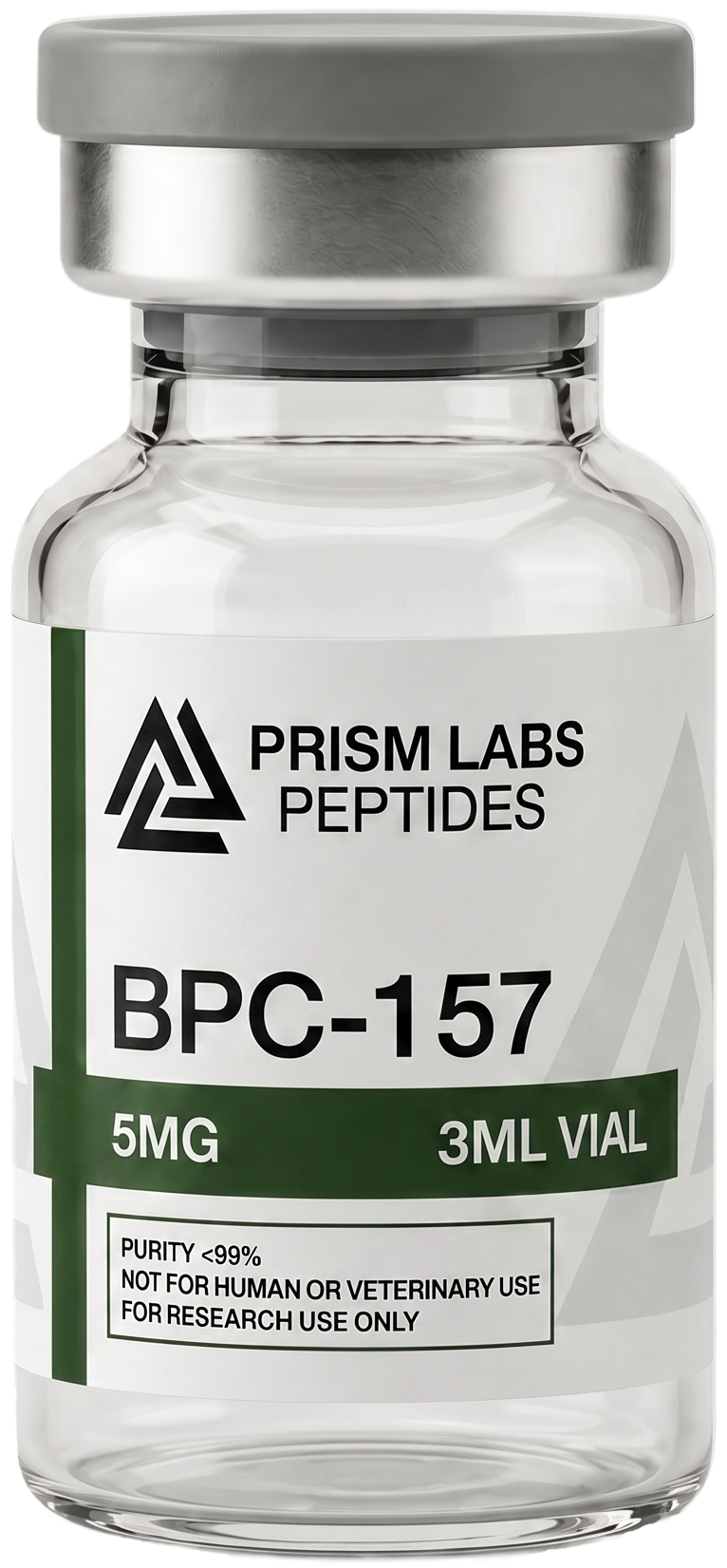
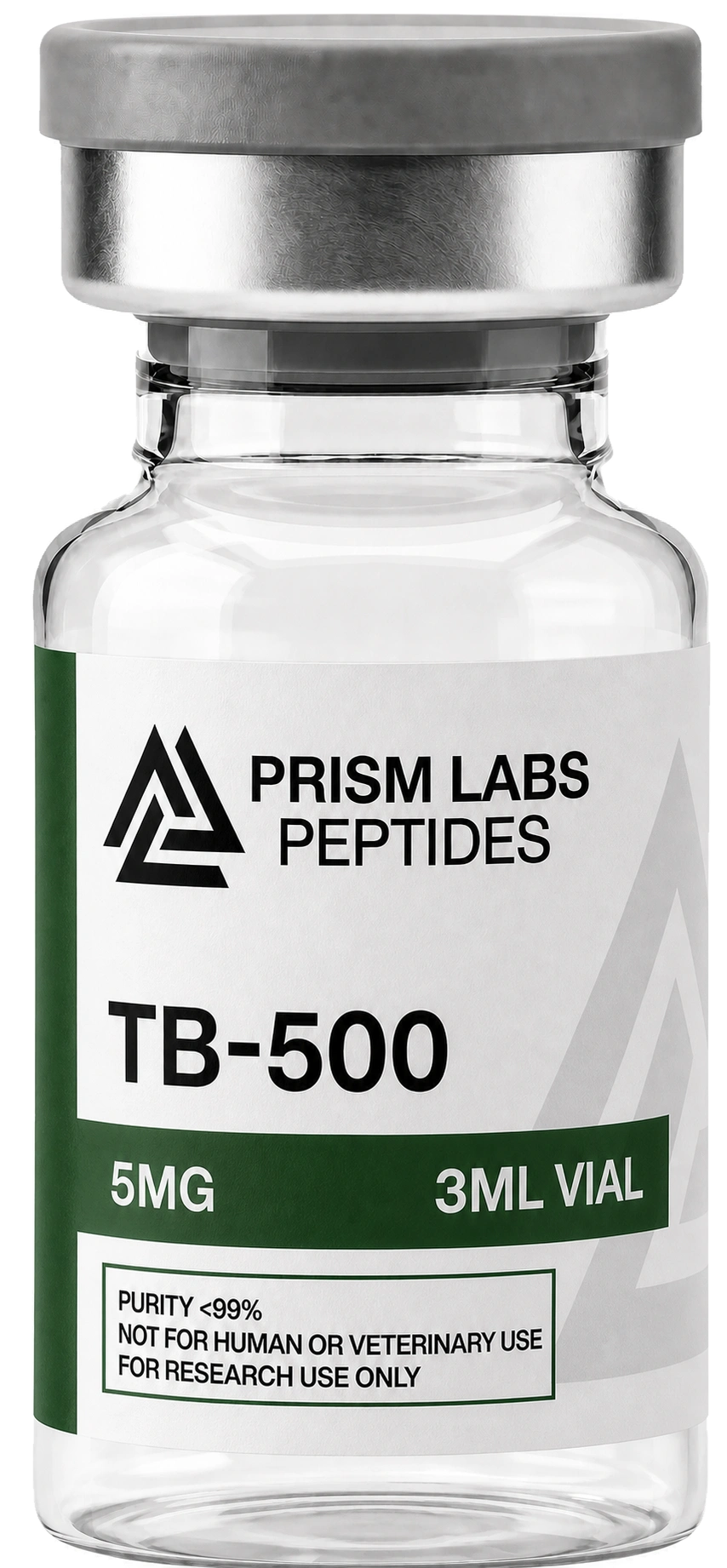
Side by side
| Detail | ||
|---|---|---|
| Format | Lyophilized vial | Lyophilized vial |
| Listed sizes | 5mg · 10mg | 5mg · 10mg |
| Price | $34.99 to $59.99 per vial | $29.99 to $49.99 per vial |
| Availability | In stock | In stock |
| Reported purity | 99.56% | 99.74% |
| Latest batch report | September 23, 2026 · lot 210292 | September 23, 2026 · lot 636117 |
| Reference formula | C62H98N16O22 | — |
| Reference weight | 1419.5 g/mol | — |
| Reference sequence | H-GEPPPGKPADDAGLV-OH | — |
| Reference CAS number | 137525-51-0 | — |
Catalog figures, current at page load. Published batch reports cover past lots and do not name the lot a new order ships with.
and — how much does each cost?
: $34.99 to $59.99 per vial. : $29.99 to $49.99 per vial. Packs discount every vial in the order: 2 vials 5% off, 3 vials 10% off, 5 vials 14% off, 10 or more vials 18% off. Free standard shipping on orders over $125.
Where to buy and
Both are for sale direct from Prism Labs, USA made, with the batch Certificate of Analysis published on each product page. Orders placed before 4:30 PM CT ship the same day, seven days a week, when inventory is available.
and — are they in stock?
: in stock. : in stock. Each product page carries live availability.
01
At a glance
The main differences in one list:
- Origin: is a fragment of a protein described in human gastric juice in 1993; is based on thymosin beta-4, a protein found in most cells and sequenced in 1981.
- Size: 15 amino acids for . For , either a seven-residue acetylated fragment (Ac-LKKTETQ) or the full 43-residue protein, depending on the supplier.
- Identity: has one well-defined sequence (GEPPPGKPADDAGLV); the other name covers more than one molecule, so its COA identity result matters more.
- Research themes: gastrointestinal and tendon models for ; actin binding, cell migration and blood-vessel development for thymosin beta-4.
- Formats at Prism Labs: both as 5 mg or 10 mg lyophilized vials.
Sources: [1] PubChem · reference structure · [2] Journal of Physiology (Paris) · 1993 · [3] PNAS · 1981 · [4] Journal of Chromatography A · 2012


02
Two separate origins
came from Predrag Sikirić’s group in Zagreb, which described a gastric-juice protein in 1993 and went on to study a stable 15-residue fragment of it. A 2025 review notes that most of the evidence still comes from animal studies.
Thymosin beta-4 was isolated from calf thymus and sequenced in 1981; in 1991 it was identified as the main actin-sequestering peptide in platelets. is a trade name for synthetic peptides based on it.
Sources: [2] Journal of Physiology (Paris) · 1993 · [9] Current Reviews in Musculoskeletal Medicine · 2025 · [3] PNAS · 1981 · [5] Journal of Biological Chemistry · 1991 · [4] Journal of Chromatography A · 2012
03
Where their research overlaps
Both have been studied in tissue-repair models, which is why they are often grouped. A 2011 study examined tendon cells in culture; a 2007 study examined thymosin beta-4 in coronary vessel development in mice.
In 2026, a rat Achilles-tendon study tested each peptide alone and the two combined. It is one of the few papers to study them side by side.
These are observations in laboratory models. They are not evidence about any use in people.
Sources: [6] Journal of Applied Physiology · 2011 · [7] Annals of the New York Academy of Sciences · 2007 · [8] Joint Diseases and Related Surgery · 2026
04
Sold together
Because they are researched in similar models, Prism Labs sells them individually and together as the . Each vial in the stack keeps its own lot and COA.
05
What to check on each COA
Read each certificate for the lot number on your vial:
- : the identity result should match the 15-residue sequence and its mass.
- : the identity result shows whether the vial holds the seven-residue fragment or the full protein.
- Both: HPLC purity, and measured content against the label.
Step by step: how to read a peptide COA.
A little more clarity
Questions, answered
What is the difference between and ?
They are unrelated: one is a 15-residue fragment of a gastric-juice protein, the other is based on thymosin beta-4, an actin-binding protein.
Are and the same thing?
No. They differ in origin, sequence, size and research history.
Have they been studied together?
Occasionally. A 2026 rat tendon study tested each alone and the two combined; most papers study one or the other.
What is the ?
A Prism Labs bundle of the two peptides as separate vials, each with its own COA.
Are they for human use?
No. Prism Labs sells both for laboratory research use only.
Follow the evidence
Sources & reading notes
Open the original record for its methods and limitations. The sources below do not certify the supplied product or its finished formulation.
- PubChem · reference structure ↗
Reference structure of the 15-residue peptide; not a batch measurement.
- Journal of Physiology (Paris) · 1993 ↗
The gastric-juice protein behind the 15-residue fragment.
- PNAS · 1981 ↗
Complete sequence of thymosin beta-4.
- Journal of Chromatography A · 2012 ↗
Identifies the acetylated 17–23 fragment as the key ingredient of a veterinary preparation.
- Journal of Biological Chemistry · 1991 ↗
Thymosin beta-4 as the main actin-sequestering peptide in platelets.
- Journal of Applied Physiology · 2011 ↗
Tendon cells in culture.
- Annals of the New York Academy of Sciences · 2007 ↗
Thymosin beta-4 in coronary blood-vessel development in mice.
- Joint Diseases and Related Surgery · 2026 ↗
Rat tendon-repair study of both peptides, alone and combined.
- Current Reviews in Musculoskeletal Medicine · 2025 ↗
Narrative review of the evidence and its limits.
Prepared by Prism Labs from the linked source records and public product documentation. Research context only; not a preparation protocol or a claim about outcomes. Send a source correction.
Keep exploring
More from the research library.

vs
Two seven-residue peptides with the same tail and different parents.
Read the article ↗Comparisons
vs
Two blends that share three peptides. One extra ingredient makes the difference.
Read the article ↗Comparisons
vs
One keeps the whole hormone and protects its start. The other keeps only the first 29 amino acids.
Read the article ↗