Research library / Comparisons
vs : what is the difference?
Two seven-residue peptides with the same tail and different parents.
and are both synthetic seven-amino-acid peptides from the same Russian research tradition, and both end in the tripeptide Pro–Gly–Pro. They extend different natural peptides, though, and their research literatures point in different directions. Here is how they compare.
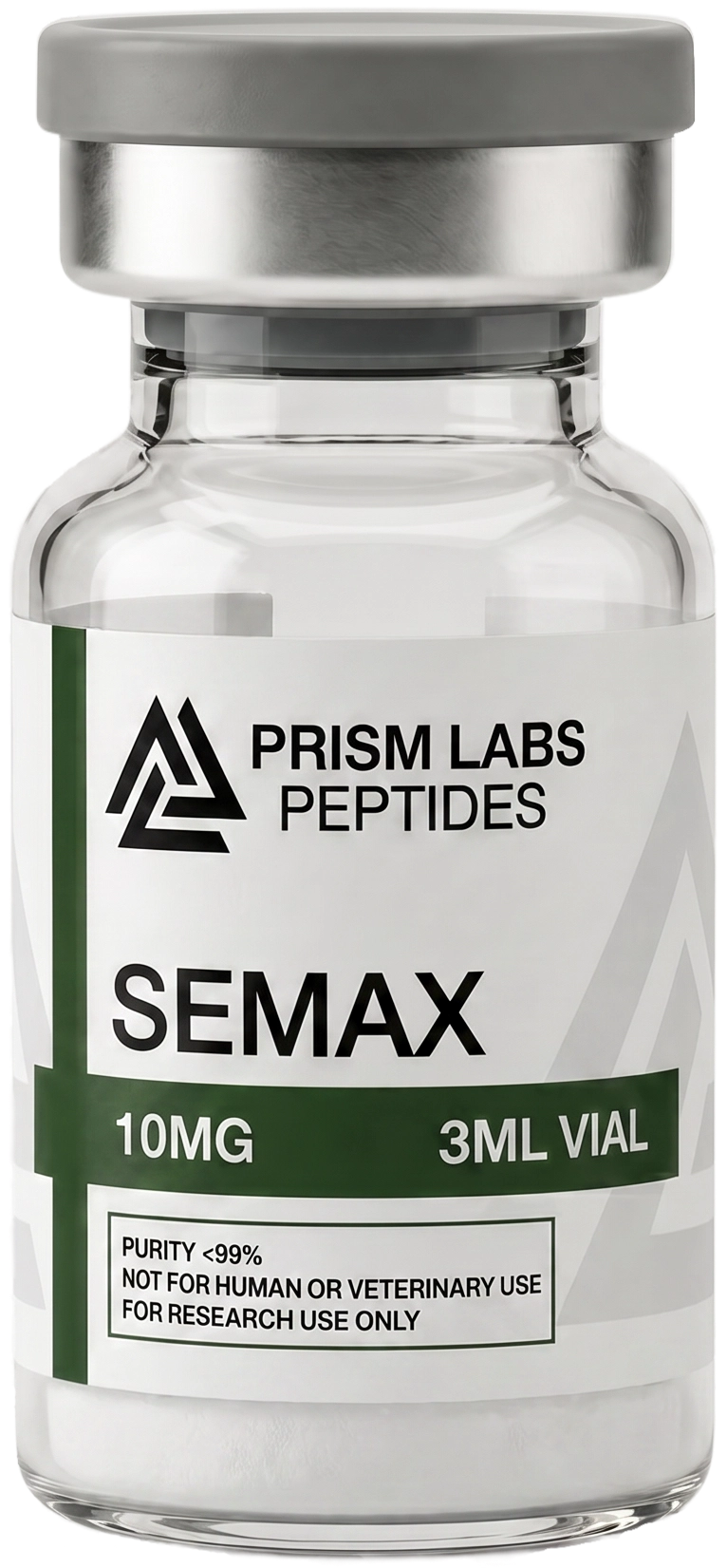
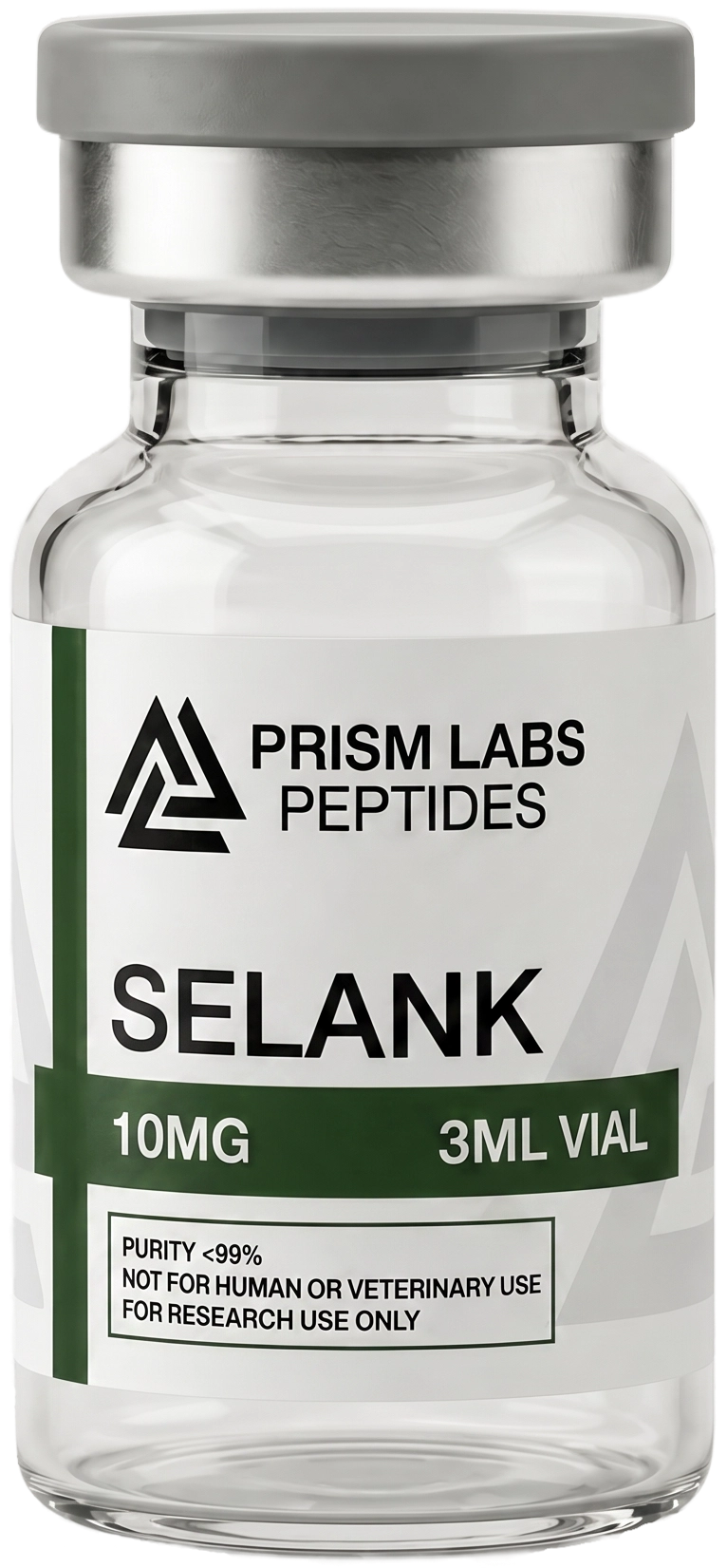
Side by side
| Detail | ||
|---|---|---|
| Format | Lyophilized vial | Lyophilized vial |
| Listed sizes | 5mg · 10mg | 5mg · 10mg |
| Price | $24.99 to $35.99 per vial | $24.99 to $35.99 per vial |
| Availability | In stock: 10mg | In stock: 10mg |
| Reported purity | 99.71% | 99.25% |
| Latest batch report | October 26, 2026 · lot 203779 | October 26, 2026 · lot 781136 |
| Reference formula | C37H51N9O10S | C33H57N11O9 |
| Reference weight | 813.9 g/mol | 751.9 g/mol |
| Reference sequence | H-MEHFPGP-OH | H-TKPRPGP-OH |
| Reference CAS number | 80714-61-0 | 129954-34-3 |
Catalog figures, current at page load. Published batch reports cover past lots and do not name the lot a new order ships with.
and — how much does each cost?
: $24.99 to $35.99 per vial. : $24.99 to $35.99 per vial. Packs discount every vial in the order: 2 vials 5% off, 3 vials 10% off, 5 vials 14% off, 10 or more vials 18% off. Free standard shipping on orders over $125.
Where to buy and
Both are for sale direct from Prism Labs, USA made, with the batch Certificate of Analysis published on each product page. Orders placed before 4:30 PM CT ship the same day, seven days a week, when inventory is available.
and — are they in stock?
: in stock: 10mg. : in stock: 10mg. Each product page carries live availability.
01
At a glance
The main differences in one list:
- Parent peptide: extends ACTH(4–7), a fragment of adrenocorticotropic hormone; extends tuftsin, a four-residue immune peptide.
- Sequence: MEHFPGP for ; TKPRPGP for .
- Reference formula: C37H51N9O10S (813.9 g/mol) versus C33H57N11O9 (751.9 g/mol).
- Research focus: neurotrophic gene expression such as BDNF for ; stress-response and GABA-related gene expression for .
- Formats at Prism Labs: both as 5 mg or 10 mg lyophilized vials.
Sources: [1] PubChem · reference structure · [2] PubChem · reference structure · [5] Brain Research · 2006 · [6] Frontiers in Pharmacology · 2016


03
Different parents: ACTH and tuftsin
begins with ACTH(4–7), a stretch of the pituitary hormone that regulates the adrenal glands. Its literature grew out of research on short ACTH fragments.
begins with tuftsin, Thr–Lys–Pro–Arg, a peptide first described as a fragment of an antibody heavy chain. Its literature starts in immunology and stress research.
Sources: [3] Russian Journal of Physiology · 2001 · [4] Current Medicinal Chemistry · 2017
04
How their research differs
Most studies of both are in rodents and cell cultures, and most measure gene expression:
- : BDNF, NGF and their receptors in rat brain tissue.
- : inflammation-related genes over time, and genes involved in GABA signaling.
- Both: a 2020 study examined them in the same brain-network experiments.
These are observations in laboratory models. They are not evidence about any use in people.
Sources: [5] Brain Research · 2006 · [6] Frontiers in Pharmacology · 2016 · [7] Doklady Biological Sciences · 2020
05
Formats and full profiles
Prism Labs supplies each as a lyophilized vial (5 mg or 10 mg), each lot with its own COA, reconstituted with bacteriostatic water such as .
Full profiles: What is peptide? and What is peptide?
A little more clarity
Questions, answered
What is the difference between and ?
Both are seven-residue synthetic peptides ending in Pro–Gly–Pro. One extends an ACTH fragment (MEHFPGP), the other tuftsin (TKPRPGP), and their research literatures differ.
Are and the same?
No. They share a three-residue tail but have different sequences, parent peptides and formulas.
Were they developed by the same group?
They come from the same Moscow research tradition on short regulatory peptides and the Pro–Gly–Pro motif.
Do both come as a nasal spray?
No. Prism Labs supplies both as 5 mg and 10 mg lyophilized vials, each lot with its own COA.
Are they for human use?
No. Prism Labs sells both for laboratory research use only.
Follow the evidence
Sources & reading notes
Open the original record for its methods and limitations. The sources below do not certify the supplied product or its finished formulation.
- PubChem · reference structure ↗
Reference structure of the ACTH-fragment analogue; not a batch measurement.
- PubChem · reference structure ↗
Reference structure of the tuftsin analogue; not a batch measurement.
- Russian Journal of Physiology · 2001 ↗
Review of ACTH-fragment and glyproline peptides by the originating group.
- Current Medicinal Chemistry · 2017 ↗
Review of tuftsin and its analogues.
- Brain Research · 2006 ↗
BDNF and TrkB expression in the rat hippocampus.
- Frontiers in Pharmacology · 2016 ↗
Genes involved in GABA signaling.
- Doklady Biological Sciences · 2020 ↗
Brain-network study of both seven-residue peptides.
Prepared by Prism Labs from the linked source records and public product documentation. Research context only; not a preparation protocol or a claim about outcomes. Send a source correction.
Keep exploring
More from the research library.
vs
Two unrelated peptides that keep turning up in the same studies.
Read the article ↗Comparisons
vs
Two blends that share three peptides. One extra ingredient makes the difference.
Read the article ↗Comparisons
vs
One keeps the whole hormone and protects its start. The other keeps only the first 29 amino acids.
Read the article ↗