Research library / Guides
Six peptides, prescription compounding only, and no FDA approval.
In a notice published October 30, 2026, HHS said it does not intend to take enforcement action against state-licensed pharmacies, federal facilities or licensed physicians that compound six peptides under set conditions: BPC-157, Epitalon, KPV, MOTS-c, Semax and TB-500. It does not approve any of them. It covers compounding for a patient with a prescription, not research-use products.
01
What HHS actually did
This is enforcement discretion, not approval. The six peptides stay unapproved, and they are not on the 503A bulks list, which FDA is still developing through rulemaking.
HHS says the policy runs until a final rule decides whether each peptide goes on that list. It may revisit the policy sooner if a safety signal or product quality issue arises.
The Federal Register notice calls the document a draft that “does not establish any rights for any person and is not binding on HHS or the public.” Written comments are open for two weeks after publication, which is until about November 13, 2026.
Sources: [1] HHS · 503A peptide enforcement discretion policy · 2026 · [2] Federal Register · 2026-22192 · October 30, 2026
02
What a compounder has to do
The policy applies only when all of its conditions are met. The main ones:
- Compound against a valid, patient-specific prescription.
- Use a bulk ingredient whose original manufacturer is registered with FDA and follows current good manufacturing practice, with the facility’s location on the certificate of analysis.
- Hold a certificate of analysis showing identity, purity, potency and the absence of harmful contaminants such as endotoxins, heavy metals and microbes.
- Make single-ingredient products only. Each product may hold one listed peptide, so blends fall outside the policy.
- Label the product “This is a compounded drug product. Not for resale.”
- Report products compounded, serious adverse events and quality problems to FDA and the states involved.
- Co-package or use no drug delivery device more complex than an FDA 510(k)-cleared syringe.
Sources: [1] HHS · 503A peptide enforcement discretion policy · 2026
03
The forms the policy names for each peptide
Appendix B of the policy limits each peptide to a specific form and route for compounding:
- BPC-157 acetate: subcutaneous, intramuscular, oral and topical.
- TB-500 acetate: subcutaneous or intramuscular injectable.
- MOTS-c acetate: subcutaneous or intramuscular injectable.
- Epitalon acetate: subcutaneous or intramuscular injectable, dispensed in intermittent courses.
- Semax free base: intranasal.
- KPV acetate: topical and oral.
These are limits on what a compounder may make under the policy. They are not instructions for any product, and they say nothing about research material.
Sources: [1] HHS · 503A peptide enforcement discretion policy · 2026
04
What FDA’s reviewers and the advisory committee said
Appendix B records a split. For each of the six, FDA’s Center for Drug Evaluation and Research recommended against listing the peptide, and the Pharmacy Compounding Advisory Committee voted in favor.
HHS gives three kinds of reason for going ahead: newer lot certificates that report results the Center had found missing, use that is now documented, and the policy’s own conditions or its reading of the safety record. These are HHS’s reasons for an interim policy, not an FDA finding that any of the six is safe or effective.
Sources: [1] HHS · 503A peptide enforcement discretion policy · 2026
05
What it does not change
- No FDA approval. In HHS’s words, compounded drugs are not FDA-approved, “which means FDA does not review their safety, effectiveness, or quality before they are marketed.”
- Other peptides are not covered. Only the six in Appendix A are named.
- Research-use products are outside it. The policy addresses compounding for a named patient. HHS says it “will discourage the continued, widespread use of certain research-use-only peptides supplied by foreign manufacturers that pose a safety risk to US patients.”
Sources: [1] HHS · 503A peptide enforcement discretion policy · 2026
06
Where this leaves research-use peptides
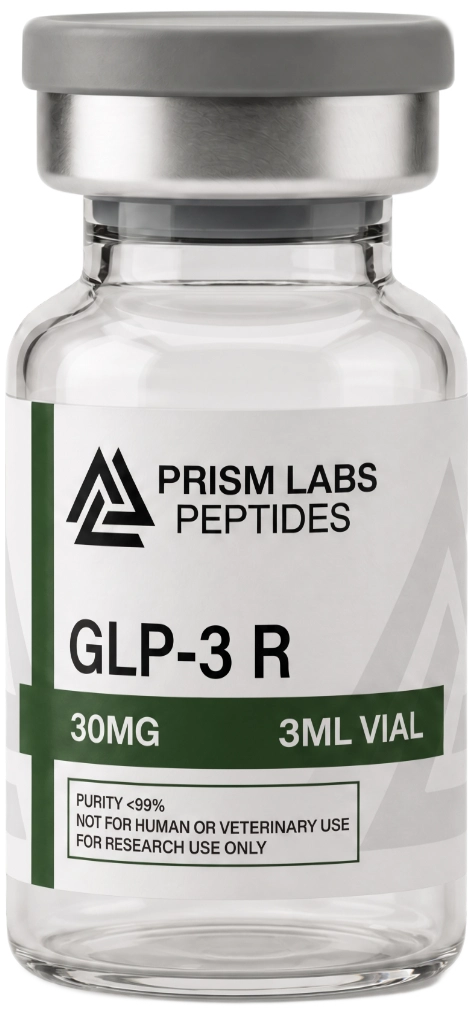
Prism Labs is not a compounding pharmacy or an outsourcing facility, and this policy does not cover what we sell. Our vials are sold for laboratory research use only, and that has not changed. They are not compounded drugs and are not for human or veterinary use.
For a patient, the route the policy describes is a prescription filled by a licensed compounder.
More on the label itself: what research peptides are and what RUO means.
Sources: [1] HHS · 503A peptide enforcement discretion policy · 2026
A little more clarity
Questions, answered
Is BPC-157 FDA-approved now?
No. The policy is about enforcement, and it says compounded drugs are not FDA-approved.
Does the policy cover research-use peptides?
No. It addresses compounding by state-licensed pharmacies, federal facilities and licensed physicians for a patient with a prescription. It mentions research-use-only peptides only as something it aims to discourage.
How long does the policy last?
It has no end date. HHS says it applies until a final rule decides each peptide’s place on the 503A bulks list, and HHS may revisit it sooner.
Does it cover blends?
No. A compounded product under the policy may hold only one listed peptide.
Are Prism Labs vials for human use?
No. Prism Labs sells them for laboratory research use only.
Follow the evidence
Sources & reading notes
Open the original record for its methods and limitations. The sources below do not certify the supplied product or its finished formulation.
- HHS · 503A peptide enforcement discretion policy · 2026 ↗
The policy, its list of six peptides, and the routes and testing standard in its appendices.
- Federal Register · 2026-22192 · October 30, 2026 ↗
The notice announcing the policy, docket HHS-OASH-2026-0496, with the comment period.
Prepared by Prism Labs from the linked source records and public product documentation. Research context only; not a preparation protocol or a claim about outcomes. Send a source correction.
Keep exploring
More from the research library.
What are research peptides?
What the RUO label means, where it comes from, and what it does not promise.
Read the article ↗GuidesHow to read a peptide COA
Three results, three different questions. Read them separately.
Read the article ↗GuidesWhere to buy peptides
Eight checks that separate a documented supplier from a risky one.
Read the article ↗